What the labels mean
What Genuine Leather Actually Means
Genuine leather is real hide — the leftover split, corrected and stamped. It is a grade, and a low one. If they were proud, they would have printed full-grain.
Updated 26 Mar 2026 · 8 min read · what does genuine leather mean
Genuine is leftover splits
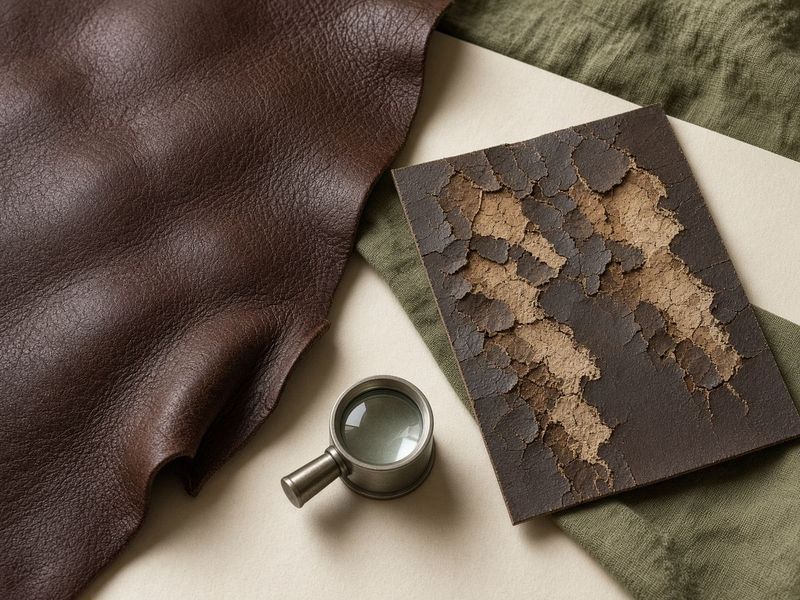
A hide is split like plywood. The outer face, with the original grain and the tightest fiber, becomes full-grain or top-grain. What is left is the fibrous, weaker split. That split can be called genuine leather, corrected grain, or “real leather” on a marketplace listing. Factories sand it, coat it in polyurethane pigment, and stamp a grain so it photographs like calf.
It is not fake in the counterfeit-bag sense. It came off an animal. It is fake in the quality sense: the surface you see is a coating, the structure underneath is the wrong part of the hide, and cream polish sits on the pigment instead of feeding the fiber. That is why a genuine-leather sneaker creases white at the flex in a year.
Full-grain, top-grain, genuine, bonded
Full-grain keeps the original surface, including the small scars. It patinas. It takes cream. It is what a cobbler wants to see. Top-grain is that same outer layer sanded to remove marks, then often pigmented — smoother, a bit less breathable, still a real upper. Most good shoes and bags that are not marketed as “raw” are top-grain.
Bonded leather is shredded scrap mixed with polyurethane binder and rolled into a sheet. It peels. It is sold on desk blotters and cheap album covers. If the hangtag says bonded, laminated, or “leather look,” walk. If it says genuine and costs what bonded costs, assume the coating is doing the work.
| Grade | What it is | How it ages | Honest price signal |
|---|---|---|---|
| Full-grain | Intact outer hide | Patina, scuffs, decades | Belt $80–150; bag $300+ |
| Top-grain | Outer hide, sanded | Stable color, slower patina | Most “nice” shoes and bags |
| Genuine / corrected split | Lower split plus pigment stamp | Coating cracks at flex | Belt $25–40; sneakers $60–90 |
| Bonded | Scrap plus glue plus film | Peels in sheets | Do not buy as leather |
“Genuine” is a warning, not a boast
Luxury and small makers print the grade they are proud of: full-grain calf, veg-tan bridle, horsehide, chrome-tan goat. They do not spend a hangtag to say genuine. When a brand leads with genuine leather, they are using the only legal word that still sounds like quality to a shopper who has not read this page.
Run the same skepticism you would on a too-cheap “14k” stamp. A $49 “Italian genuine leather” tote is a split with a story. A $320 tote that names the tannery and the grade is in the range where cleaning and conditioning actually pays off. Marketing copy that says “genuine leather lining” inside a coated bag is a way to print the word leather twice.
What to buy instead, and what it costs
For shoes you will tree and cream, buy welted top-grain or full-grain, $250–450, and budget resoles. For a belt, full-grain with a screw-in buckle so you can shorten it, $80–140. For a bag, top-grain with edge paint or a saddle stitch, $280–600 from a small maker beats a $120 genuine-leather department-store tote that collapses in two commutes.
If the budget is $40, do not hunt for “the good genuine.” Buy canvas, buy webbing, or buy a known PU and plan to replace it. The expensive mistake is paying mid-range money for split hide because the tag said leather.
Questions, answered
- Is genuine leather real leather?
- Yes. It is animal hide, usually a corrected split. Real is not the same as good. Full-grain and top-grain are the grades worth paying leather money for.
- Is genuine leather better than fake leather?
- It is usually better than PVC, and often worse than a well-made coated fabric you expected to replace. Against full-grain, it loses on every axis that matters after year two.
- How can I tell genuine from full-grain in a shop?
- Look at the cut edge and the back. Full-grain has a tight, fibrous cross-section and an interior that looks like hide. Genuine often has a plastic-looking face, a stamped repeating grain, and a suede-ish or fabric back. The price is a tell: genuine is priced like a coating.