Fit, knots, shoes
How to Tie a Tie: Four Knots, a Dimple, and When to Knit
Four-in-hand is the weekday knot. Half-Windsor is the interview. Full Windsor fills a spread collar. The Oriental is the small knot that leaves you a tail. Match width to the lapel, pinch a dimple, and leave knits out of a Windsor.
Updated 16 Mar 2026 · 8 min read · how to tie a tie
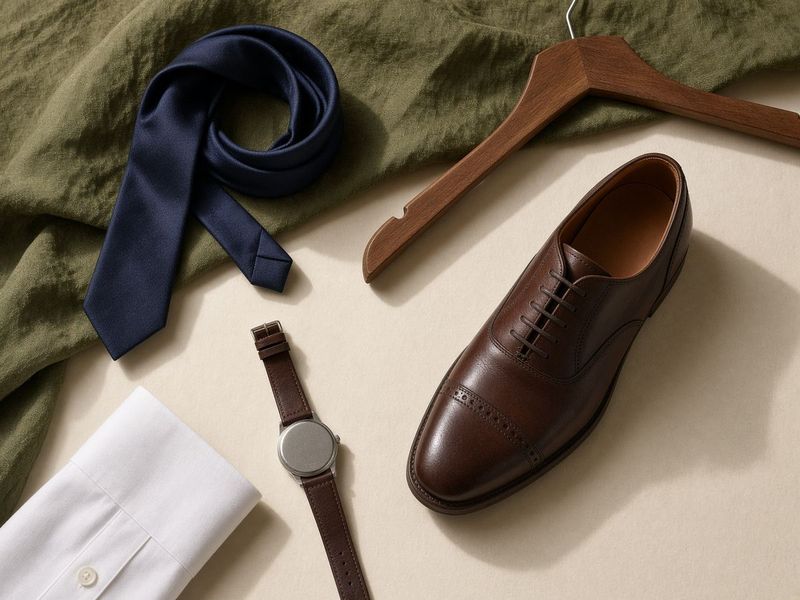
Four-in-hand, half-Windsor, full Windsor, Oriental
Four-in-hand: wide end on your right, hanging about 30cm below the narrow end. Cross wide over narrow. Wrap once around. Bring the wide end up through the neck loop, then down through the front loop you just made. Cinch and slide. The finished knot is a little off-centre. That is the knot, not a mistake. British officers tied it on horseback; you are tying it at a bathroom mirror. It is the knot that belongs with a first navy suit and a point or button-down collar.
Half-Windsor adds one extra trip around the nest. Symmetric, medium, the knot for a job interview when someone is judging you from a chair. Full Windsor is the large triangle. It belongs on a cutaway or wide-spread collar and a thin, unlined silk — not on a button-down, and not on a thick lined tie or you will run out of tail. Oriental (also called the simple knot or Kent) starts with the wide end crossing under the narrow, then up through the neck and down through the front loop. One pass. Smallest knot, least fabric, the one to use when a 145cm tie would otherwise die at mid-chest after a Windsor.
| Knot | Shape | Fabric used | Collar |
|---|---|---|---|
| Four-in-hand | Slim, slightly asymmetric | Medium | Point, button-down |
| Half-Windsor | Medium, symmetric | Medium-high | Point, moderate spread |
| Full Windsor | Large triangle | Most | Wide spread, cutaway |
| Oriental / Kent | Small, slightly asymmetric | Least | Point, thick ties, short blades |
The dimple is structure, not decoration
As the knot comes up to the collar, pinch the blade just under the knot with your index finger and thumb and hold that crease while you tighten. The dimple is how a woven silk keeps a triangular face instead of a stuffed sausage. Grenadine (garza fina or garza grossa, $80–180 from a mill that actually weaves it) holds a dimple because the open weave has body. A repp stripe with a lining holds one. Cheap unlined polyester will not, no matter how long you pinch.
Do not dimple a knit. Do not dimple a wool challis so hard the face goes shiny. A dimple that is a trench down the middle of the blade is too much; you want a single crease that fades 3–4cm down. If the knot sits crooked after the pinch, the wrap was uneven — untie and redo rather than yanking. Practice this forty times on a $20 polyester you do not care about, then put it on the silk.
Tie width versus lapel width
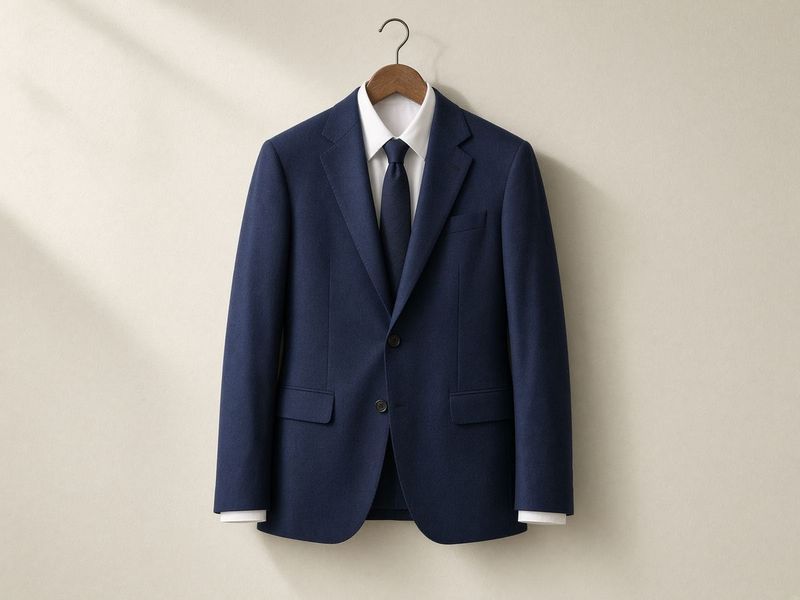
The rule is boring and it works: the tie should be about as wide, at its widest point, as the lapel of the jacket you are wearing. A modern notch lapel on an off-the-rack navy blazer is usually 7.5–9cm. Buy 7.5–8.5cm ties. A 5cm skinny tie against a 9cm lapel is two different decades on one torso. A 10cm 1970s blade against a narrow 6.5cm fashion lapel is a costume.
Measure the jacket, then the tie, with a tape. If you own one jacket, buy ties that match it and stop. Peak lapels on a double-breasted can take a slightly fuller 9cm blade. A shawl tuxedo lapel wants a black satin or grenadine in the same width as the shawl, not a novelty knit. The knot should fill the collar gap without spilling over the wings — that is a knot-and-collar problem, which is why a full Windsor on a button-down looks like a fist in a letterbox.
When a knit tie is the right tie
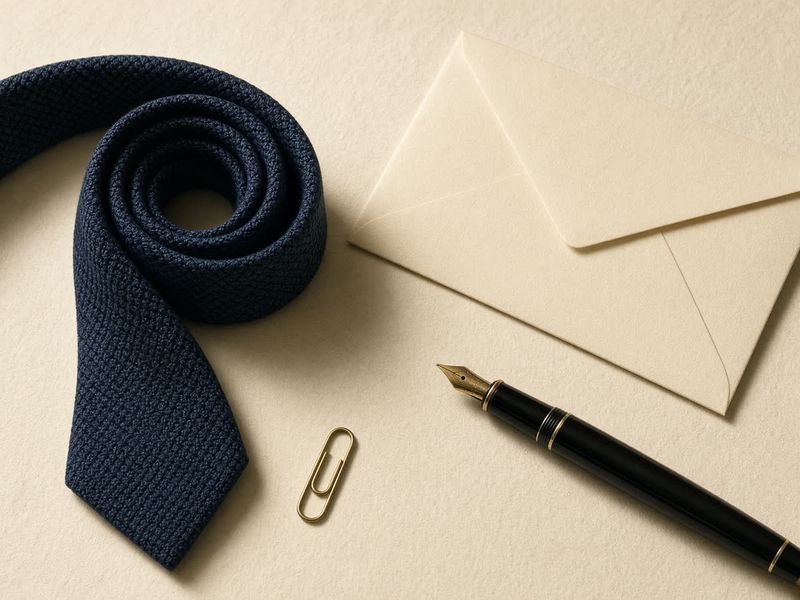
A knit tie is a different object. Silk knit or wool knit, square bottom, visible ribs, $40–90 for a decent one (Drake’s, the better Uniqlo knits, small mill remnants). It takes a loose four-in-hand or an Oriental. It does not take a Windsor of any size — the bulk turns into a lump. It does not take a dimple. The blade should still kiss the belt, but a slightly short knit is less of a crime than a short silk, because the square end is already informal.
Wear a knit with a blazer, a sport coat, chinos, a flannel trouser, an open-collar shirt you decided to knot anyway. Do not wear it to a funeral, a court date, or an interview in a conservative field — those rooms want woven silk. Do not wear it with cap-toe oxfords and a hard crease unless you already know the room is business-casual. A navy or burgundy silk knit is the weekday upgrade on a navy hopsack blazer; a pale linen knit is a summer affectation that spots with water. One navy knit and one grenadine will do more work than a drawer of printed silks.
Questions, answered
- Which tie knot is the most professional?
- Half-Windsor for interviews and client meetings. Four-in-hand is professional enough for every other office that still wants a tie. Full Windsor reads ceremonial unless the collar is wide. Oriental is too small for a spread collar in a formal room.
- Should the tie match the lapel or the collar?
- Width matches the lapel. Knot size matches the collar gap. A 8cm grenadine on a 8cm lapel, four-in-hand on a point collar, half-Windsor on a moderate spread. Those two matches, not a third to your socks.
- Can I wear a knit tie with a suit?
- A navy wool suit on a Friday, with a navy or burgundy silk knit and no hard shine on the shoes, can work in a relaxed office. A funeral suit, a court suit, or an interview suit wants woven silk and a dimple. When in doubt, silk.