Carry less, better
How to Clean a Leather Bag Without Ruining It
Barely damp cloth. pH-balanced conditioner. No saddle soap on finished calf. The goal is to remove grit, not to give the bag a spa day.
Updated 21 Mar 2026 · 6 min read · how to clean a leather bag
Identify the hide before you wet anything
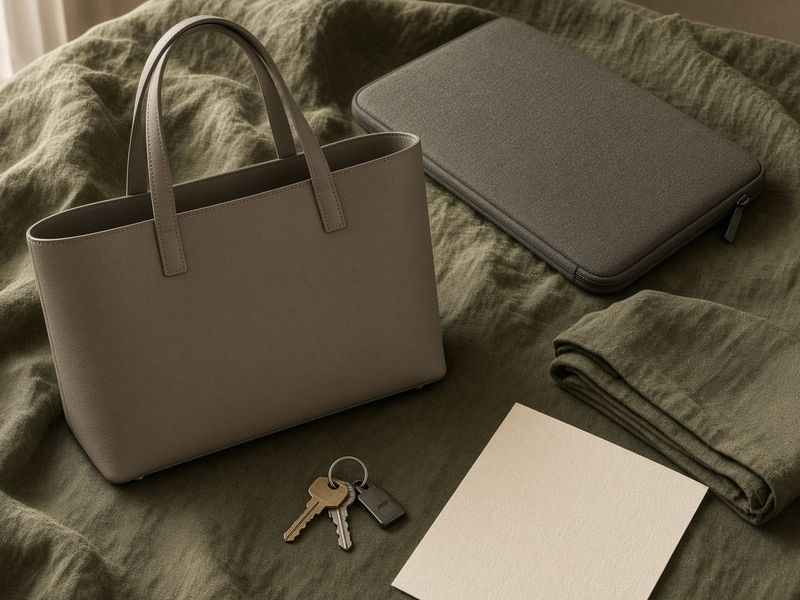
Finished calf and most fashion bag leathers have a protective topcoat. They want a wipe, not a wash. Suede and nubuck are unfinished and want a brush and an eraser, not a wet cloth. Patent wants a barely damp cloth and no conditioner. Coated canvas is not leather; mild soap on the coating, leather cleaner only on the leather trim.
“Genuine leather” on a tag is a grade claim, not a care label. It often means a corrected, pigmented hide that will take a wipe and will look plastic if you oil it. Vegan leather (usually polyurethane on a backing) should not get leather conditioner at all — it sits on the surface and stays tacky. Wipe PU with a damp cloth and stop.
The actual cleaning, in order
Empty pockets. Shake out grit. Soft horsehair brush or a dry cloth on the body, especially the base and the handle drops — that is where city dirt lives. Then a cloth wrung out until it is almost dry. Work in small circles. Do not flood stitching. Handles that meet skin get the same treatment plus attention to dye transfer: a dedicated leather cleaner, not a magic eraser, which will flatten the finish.
Water stains on smooth leather often lift if you dampen the whole panel lightly so the ring cannot dry as a tide mark, then let it air-dry. Do not point a hair dryer at it. Stuff the bag with paper so the sides do not collapse while they dry. A slouchy tote — the kind you should not have chosen as a work bag — will taco overnight if you leave it empty and wet.
- Barely damp cloth, or a cleaner labelled for finished leather
- pH-balanced conditioner, pea-sized, then buff off the excess
- No saddle soap on finished calf or glazed bag leather
- No olive oil, coconut oil, baby wipes, or acetone
Conditioning is a film, not a drink
Finished leather is not a dry sponge. A thin film of conditioner replaces oils the topcoat lost and keeps the hide from creasing white. Too much conditioner leaves a greasy bag that attracts grit. Apply, wait ten minutes, buff. Twice a year is plenty for a bag that lives indoors. A daily-commute bag in winter air might want it every couple of months on the handles only.
Saddle soap is alkaline and meant to clean dirty vegetable-tanned bridle and saddlery. On glazed calf it strips, dulls, and can raise the grain. The same logic as leather shoes: cream on calf, not saddle soap; wax on tough work leather if you want shine and weather, not on a structured handbag that should not look like a brogue.
Storage is most of the cleaning
Stuff with paper, stand it, dust bag if you have one, out of sun. Do not store in plastic. Do not hang a heavy leather tote by its straps in a closet for six months — the straps will stretch into a new, worse shape. Keep it away from the radiator that dries the hide into a crack.
Ink and oil stains are a restorer’s job if the bag is worth more than the repair. Home solvents take the colour with the stain. Colour transfer from jeans onto a light handle is common; a leather restorer or a house spa service will do more than kitchen chemistry. If the bag cost $80 and the handle is black with dye, it has finished its honest life.
Questions, answered
- Can I use baby wipes on a leather bag?
- No. They are damp, soapy, and often contain oils or alcohol that streak a finish. A barely damp cotton cloth is the whole invention.
- How often should I condition a bag?
- When the leather looks dry or the handles feel chalky — often two to four times a year for a daily bag, almost never for a bag that lives in a cupboard.
- What about suede?
- Brush. Use a suede eraser on spots. A suede protector spray before the first rain, tested on the base. Water on suede drives the stain in.